Tuesday, January 22, 2013
Daily Question Catch Up
Well, last week was a BLUR and I just realized I never added any of our daily questions or rundowns on here. So here at least of the daily questions from last week and in another post I will place the note as well. We are still in this land of Cell cycle, DNA, DNA Replication so there is a LOT of new information that seems very scattered but we are STARTING to put this all together!! You guys are holding on strong - keep it up!
Monday January 14th
Which Cell provides the most efficient surface-area to
volume ratio and WHY?
The smallest cell here would be the most efficient. WHY?? Because of the three cells shown here it has the HIGHEST surface area to volume ratio. Why is this important? The more surface area there is, the faster a cell can obtain nutrients and release waste. This is a KEY factor in cell size. (And why cells cannot just grow infinitely large)
Before a cell can divide what must the cell make a copy
of?
ALL of the chromosomes (in human cells that would be 46 chromosomes)
Draw out what a duplicated chromosome would look like
labeling the different parts. Then
describe how the two sides are related.
The chromatids are EXACT copies of each other (same exact DNA on each side)
Tuesday January 15th
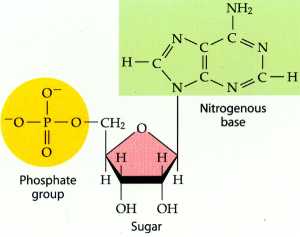
DNA is made up of nucleotides. What are the three parts that make up a nucleotide?
Of these, which two make up the backbone? The Sugar (deoxyribose) and the phosphate group.
Which make up the “code” that writes our instructions?
The nucleotide bases
There are 4 different “codes” in DNA, what are they and
how do they pair up?
Adenine, Guanine, Cytosine, Thymine
A pairs with T
C Pairs with G
(G Created All Things)
During the Cell cycle – when is this DNA replicated?
The S phase (Synthesis Phase)
Wednesday January 16th
If given the following DNA Sequence, what would the
complementary strand look like?
GCCTAAGCG
CGGATTCGC
In EACH one of our cells, how many of these nucleotides
are there? (Recall from yesterday’s video) 6 BILLION
Thursday
January 17th
DNA replication is said to be semi-conservative. Once DNA replication is completed how are
the two resulting DNA molecules related to each other.
Each DNA molecule has one "original" or "Template" strand and one "new" Strand (See above how that works)
There are two “worker” molecules that perform DNA
replication. What are these two
molecules and what type of organic molecule are they? DNA Helicase which "unzips" the DNA and DNA Polymerase which adds new nucleotides (again, reference the image above) These are Enzymes which are a type of Protein
Tuesday January 22nd
In each of our cells, how many chromosomes are there? 46
These chromosomes are made up of both DNA AND Protein
Before a cell divides what MUST happen to the single
chromosomes? It must replicate (to form sister chromatids) - see picture below
Then the cell goes through a process known as Mitosis which is the division of which part of the cell? The nucleus
Thursday, January 10, 2013
Cell Reproduction and DNA - Back to the grindstone
On Monday i had you guys take some notes about the structure of DNA. After your midterm you got some background information about cellular reproduction and today we started to merge the two together with the following daily questions.
Thursday January 10th
About how many cells does your body make EVERY day?????? 2 Trillion
Where do these cells come from? Pre-existing Cells
What limits the size in which cells can get? The Surface Area to Volume Ratio and the DNA
BEFORE a cell divides, what MUST happen first?? All the "equipment" a cell needs to function needs to copy (including the DNA)
After that we discussed the first couple pages of your reading guide using the online book. Remember, you always have access to this from edline. Here again is the info you need to access it.
What does DNA stand for? Deoxyribonucleic acid.
Of all the three parts of the nucleotides found in DNA,
Which has 4 different options and ultimately writes the “code” for DNA - The nucleotide bases (adenine, guanine, cytosine, thymine)
After that we discussed the first couple pages of your reading guide using the online book. Remember, you always have access to this from edline. Here again is the info you need to access it.
Use any of the following user names To access the online book go to http://my.hrw.com
ALL passwords arebiology
Usernames:
bbiology20
|
cbiology19
|
dbiology1
|
ebiology8
|
fbiology7
|
gbiology9
|
hbiology28
|
ibiology3
|
jbiology7
|
kbiology3
|
lbiology6
|
mbiology16
|
nbiology3
|
obiology5
|
pbiology5
|
rbiology5
|
sbiology79
|
tbiology7
|
vbiology2
|
wbiology2
|
ybiology1
|
zbiology1
|
Friday, December 14, 2012
Cellular Respiration
Wednesday while I was at a workshop you guys started into the cellular respiration notes. Then when I got back we started talking through them. Here were the daily questions for Thursday and Friday: Thursday
December 13th
During Cellular respiration, Glucose and Oxygen are converted into ATP!!!! which provides energy for
our cells and a waste product is Carbon Dioxide.
The FIRST stage of cellular
respiration is called Glycolysis.
This is the splitting of Glucose and occurs where in the cell? The cytoplasm
Friday
December 14th
What are the end products of glycolysis?
A small amount of ATP and 2 3-carbon pyruvate molecules
If oxygen is available, what processes will those
molecules enter? The Krebs cycle and Electron Transport Chain
Which produces more ATP aerobic or anaerobic
respiration? Aerobic respiration
The following are the notes that we having taken (and will continue to take) on cellular respiration.
Tuesday, December 11, 2012
Photosynthesis Wrap up... AGAIN!
Tuesday December 11th
Information concerning a metabolic activity is shown below
enzyme
X --------------> products + energy for metabolism
Substance X is most likely
|
A. DNA
B. Oxygen
C. ATP (ATP is split into ADP + P which releases Energy. Remember, Energy is stored in chemical bonds of organic compounds - when these bonds are broken, energy is released.
D.
Chlorophyll
|
Using a Microscope, a student observes a small, green
organelle in a plant cell. Which
energy transformation most likely occurs first within the observed organelle?
|
A. ATP to
Light
B. light To
chemical (That small green organelle was the chloroplast, what energy transformation occurred there?!?! Light energy (from the sun) was converted into chemical energy (in the form of ATP and NADPH)
C. Heat to
electrical
D. Chemical
to chemical
|
In heterotrophs, energy for the life processes comes from
the chemical energy store in the bonds of
|
A. Water
molecules
B. Oxygen
Molecules
C. Organic
Compounds (See above!)
D. Inorganic
Compounds
|
After these, we reviewed the main concepts of photosynthesis. As a review we added the following slide to our notes.
Tomorrow you guys will first take a Daily Question type quiz over everything we have done so far (Basics of Bioenergetics and Photosynthesis.) After that you will get down the notes for cellular respiration and we will discuss them on Thursday.
Monday, December 10, 2012
Photosynthesis Wrap Up
Monday December 10th
The second part of
photosynthesis does not depend on light and therefore is known as the
Light Independent Reaction (Sometimes called the dark reaction but that is not an accurate term because it does happen when light is available, it just does not depend on the energy from the sun) .
During this stage Carbon
from Carbon Dioxide is added to an organic molecule found in the chloroplast to produce
Glucose. The enzyme that
catalyzes this reaction is called Rubisco
After this, I had you finish up the directed reading, active reading, and "quiz" questions from the book. We will move into cellular respiration tomorrow.
Photosynthesis Light Independent Reactions
We started with the following daily questions that summarized yesterday's activity.
Friday
December 7th
During the first steps of photosynthesis what main
product did we create? Oxgyen
What molecule was split to create this? Water
Where did the energy come from to fuel this first
step? The Sun
Two other energy molecules were created ATP and
NADPH.
What will these molecules be used for? To fuel the next set of reactions that will make organic compounds.
We then moved into notes/activities and interactives on the light INdependent reactions (the Calvin Cycle) (Please check Edline for the notes)
The Calvin cycle can be VERY complex but I let you guys know the "take home" points that I really want you to know about it. Ultimately what I want you to know is that the Carbon that makes up glucose molecules originates from organic molecules found in
![]() |
| As much as I want to challenge you this year, I will NOT be making you memorize each of these steps!!!! |
![]() |
| This image gives you a little simpler view of the two processes. I have highlighted the Calvin Cycle to show you in general what is happening. |
![]() |
| All those links would be good go to's for a little review of what occurred during photosynthesis. I encourage you to check them out!! |
Thursday, December 6, 2012
Photosynthesis - Light Dependent Reactions
After discussing the results of the CDTs with you we moved back our chapter on bioenergetics. We started with the following daily questions
Thursday
December 6th
During the first stage of
photosynthesis energy from the SUN is absorbed by pigments such as
Chlorophyll.
This causes electrons to get
Excited and jump from one chlorophyll molecule to the next
In the mean time Water molecules are split and Oxygen is released into the atmosphere.
We then continued with notes on photosynthesis. Today we focused on the light Dependent reactions and made models of this. See the pics and descriptions below. Check edline for the notes!!
These processes were known as the light dependent reactions because they depended on energy from the sun to perform. Tomorrow we will move into the light Independent reaction which will be the creation of glucose from carbon dioxide molecules using the energy created during the steps above!!
Hold on tight!!!!!!
| The first thing we did was split water molecules using energy from the sun. |
| For each two water molecules, one molecule of Oxygen is released (the oxygen that we breath) and the hydrogen ions are now going to create a concentration gradient within the thylakoid membrane. |
| Next up is the creation of Two short term energy molecules |
| ATP is made by adding a phosphate (red) to a molecule of ADP (Yellow) |
| NADPH is created by adding a Hydrogen Ion (blue) to NADP (Orange) |
Hold on tight!!!!!!
Tuesday, December 4, 2012
CDT Results
I was VERY impressed with how you guys are progressing through the material we have already learned. This was the chart that was generated after you all finished the exam. Please keep in mind that JUST because you are in the green does NOT mean you are ready for the Keystone. It just shows me that you are progressing where you should. I told you guys on day 1 that as honors students I would be pushing you to achieve the highest level of proficiency this year. That means that we still have a ways to go! I would love to see you all in the blue in all four areas by the end of the year. There is still much we can work on! (There is still a LOT of blue above you guys that I would like to see you in!!!
My goal is to have you all in the Advanced column!! For more information on what this means follow this link
Monday, December 3, 2012
CDT
Subscribe to:
Posts (Atom)


